

You can earn your emergency first aid certification in just one intensive day of focused training. The streamlined course covers essential life-saving skills like CPR, wound management, and choking response through hands-on practice with instructor supervision. You’ll learn critical techniques through realistic scenarios while meeting professional certification standards from organizations like the AHA and Red Cross. Discover how this efficient approach can quickly prepare you for real emergencies.
Key Takeaways
- One-day first aid certification efficiently combines essential theory and hands-on practice to deliver life-saving skills in a single session.
- Training covers critical skills like CPR, wound management, and emergency response through focused, instructor-led practical exercises.
- Students learn patient assessment, bleeding control, and medical emergency management through realistic scenario-based training.
- Certification requires successful completion of written exam (80% minimum) and demonstration of practical skills under instructor supervision.
- Certificates are valid for two years and meet professional standards from organizations like AHA and Red Cross.
Why One-Day Certification Makes Sense
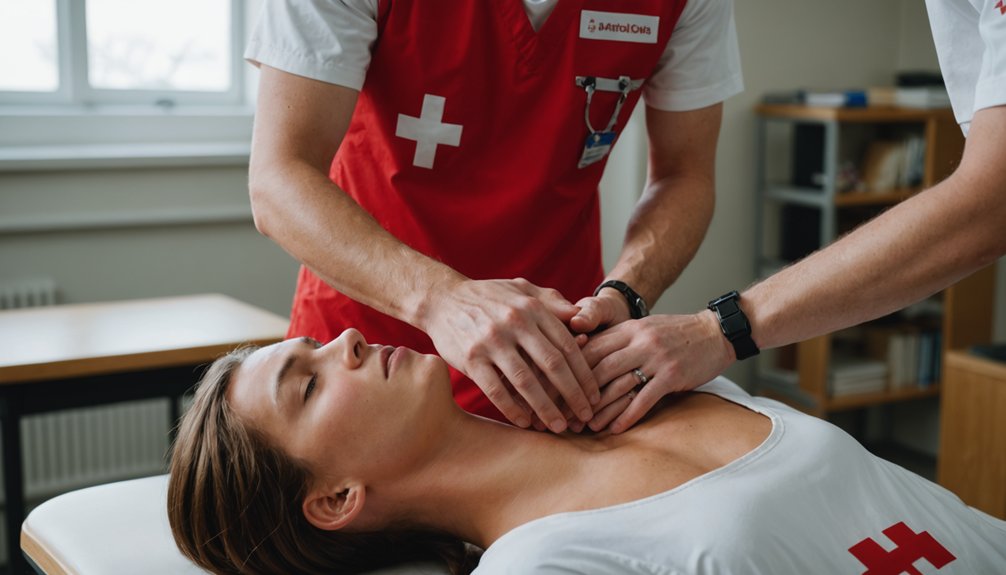
Although many training programs require extensive time commitments, one-day emergency first aid certification offers a practical solution for busy professionals who need essential life-saving skills. You’ll learn core techniques like CPR, wound management, and choking response in a focused, intensive format that eliminates unnecessary downtime.
One-day courses maximize your learning efficiency by concentrating on the most critical emergency responses you’re likely to encounter. You’ll practice hands-on skills with immediate instructor feedback, which helps cement your knowledge more effectively than drawn-out sessions. The condensed timeframe also means you’re more likely to complete the certification without scheduling conflicts or momentum loss. Plus, you’ll save money on multiple-day course fees while still gaining the fundamental competencies needed to respond confidently in emergency situations. The blended learning format combines convenient online theory with essential in-class skills training to ensure comprehensive understanding.
Core Skills Covered in Single-Day Training

Three essential skill categories form the foundation of single-day emergency first aid training: patient assessment, life-saving interventions, and injury management. You’ll learn how to quickly evaluate a situation and provide critical care when every second counts.
- Patient Assessment: You’ll master the ABC approach (Airway, Breathing, Circulation), learn to check important signs, and identify signs of shock or trauma. You’ll practice gathering significant information about the incident and patient’s condition.
- Life-Saving Interventions: You’ll develop skills in CPR, choking relief, and using an automated external defibrillator (AED). These techniques can help sustain life until professional help arrives.
- Injury Management: You’ll learn to control bleeding, treat burns, stabilize fractures, and handle common medical emergencies like allergic reactions and seizures.
Healthcare professionals can enhance their training with additional certifications in airway management and oxygen therapy techniques.
What to Expect During Your Training Day
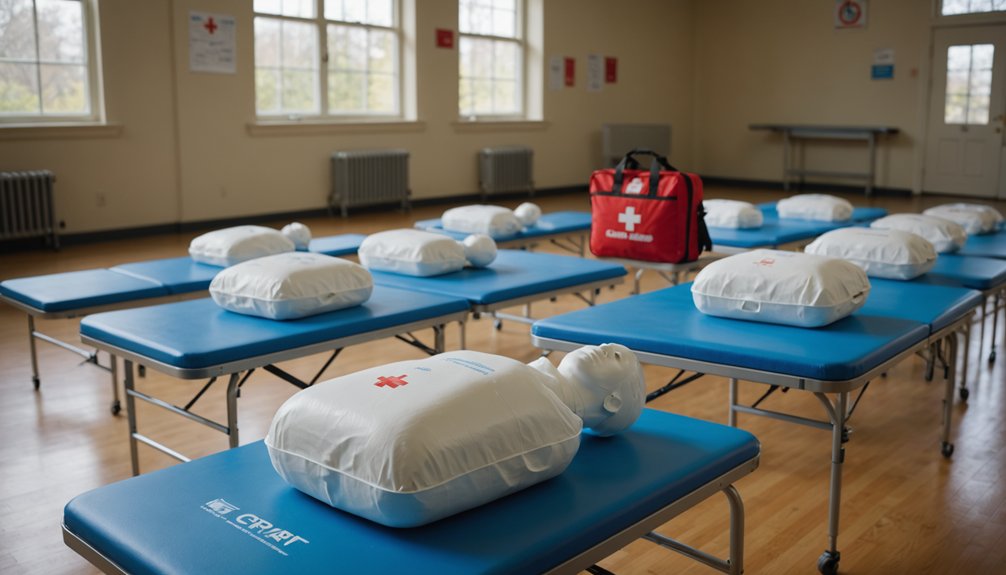
A typical first aid training day combines hands-on practice with essential theory in a structured environment. You’ll start with introductions and safety briefings before diving into the core content. Throughout the day, you’ll alternate between classroom lectures and practical exercises using mannequins and medical equipment.
The morning usually focuses on basic life support skills like CPR and recovery position techniques. After a short lunch break, you’ll learn about wound management, bleeding control, and treating common injuries. Your instructor will demonstrate each skill before you practice with a partner under supervision. The day concludes with scenario-based assessments where you’ll apply your new skills in simulated emergencies. You’ll receive feedback on your performance and, upon successful completion, your certification. Our certified safety instructors bring over two decades of experience to ensure you receive high-quality, industry-recognized training.
Hands-On Practice and Scenario Training
During hands-on practice sessions, you’ll engage with realistic medical scenarios that challenge your decision-making skills and build muscle memory. Your instructor will guide you through common emergency situations using medical mannequins and fellow students as practice partners.
Hands-on training with medical scenarios and expert guidance builds crucial emergency response skills through realistic practice with mannequins and peers.
- You’ll perform CPR compressions on adult and infant mannequins, learning proper hand placement, compression depth, and rhythm while practicing rescue breaths with protective barriers.
- You’ll master bandaging techniques for various wound types, including proper pressure application for bleeding control and appropriate dressing selection.
- You’ll participate in role-playing scenarios where you’ll assess unconscious victims, manage choking emergencies, and respond to simulated cardiac arrests while working in teams.
These practical exercises guarantee you’re ready to respond confidently in real emergencies. Unlike confined space training, this course requires active physical participation and hands-on skill demonstration.
Meeting Professional Certification Standards
Professional certification standards guarantee your first aid training meets established guidelines from recognized organizations like the American Heart Association (AHA) and Red Cross. You’ll need to complete both written and practical assessments to demonstrate your competency in essential life-saving techniques.
To earn your certification, you must score at least 80% on the written exam and successfully perform key skills like CPR, AED use, and wound care. Your instructor will evaluate your technique using standardized assessment forms. Once you’ve passed, you’ll receive a certification card valid for two years. Remember to document your certification number and expiration date for your employer or professional records. Many organizations require proof of current certification before you can work in roles involving emergency response or patient care.
Maintaining Your Skills After Certification
Since first aid skills can deteriorate over time, you’ll need to practice regularly to maintain your readiness for emergencies. Staying sharp requires both hands-on practice and knowledge refreshers between recertification periods.
Regular first aid practice isn’t optional – it’s essential for maintaining the critical skills needed to save lives when emergencies strike.
- Schedule monthly practice sessions to review CPR chest compressions, rescue breathing, and bandaging techniques using your training mannequin and first aid supplies
- Join a local first aid study group or volunteer with emergency response organizations to keep your skills fresh through real-world scenarios and group training exercises
- Download first aid mobile apps and review your course materials quarterly to test your knowledge of protocols, medication updates, and emergency response procedures
Don’t wait until your certification expires to brush up on these life-saving skills – regular practice guarantees you’ll respond confidently when seconds count.
Frequently Asked Questions
What Should I Wear to the First Aid Certification Training?
You’ll want to wear comfortable, loose-fitting clothes and flat shoes. Choose clothes you can move in easily. Bring layers since classroom temperatures vary. Avoid skirts and restrictive clothing.
Are There Age Restrictions for Taking the Emergency First Aid Course?
You’ll need to be at least 14 years old to take most standard first aid courses, though some providers require participants to be 16 or older. Check with your specific course provider.
Can I Get a Refund if I Cannot Attend the Class?
You’ll receive a full refund if you cancel at least 48 hours before the class. For last-minute cancellations, you’ll get a partial refund or can reschedule for another date.
Do You Provide Multilingual Instruction or Interpretation Services During Training?
We currently offer instruction in English only, but you’re welcome to bring your own interpreter. Please let us know in advance if you’ll need space to accommodate an interpreter.
What Happens if I Fail the Certification Exam?
If you don’t pass, you’ll get one free retake within 30 days. You’ll only need to complete the sections you failed, and we’ll provide additional study materials beforehand.